

Growing Nature. Healing Water.
CANANDAIGUA LAKE IS A CHARISMATIC BEAUTY. CREEKS SLICE THROUGH DEEP GLENS AND TUMBLE INTO SPARKLING WATER. BIRDSONG AND WILDLIFE MINGLE AMONG TANGLED TREES, BUSHES, AND FLOWERS.
It’s an assembly of organisms embedded with millions of years of evolution, enabling them to sustain and thrive in a specialized environmental niche. These organisms carry wisdom about how to keep their habitat flourishing, and homeowners Lucy and Phil Shiels are listening and learning.
Design Resources
Recognizing that Canandaigua Lake’s ecosystem is deteriorating, the Shielses planned their home and outdoor landscaping on a philosophy of reciprocity. Their home design and landscape plan give back to the land, helping to restore and sustain its health for all its inhabitants, today and tomorrow.
A Lake on the Edge
Most lakeside homes utilize a landscape template characterized by expansive lawn up to the shore. This is a problem. Biodiverse riparian zones reduce erosion and filter runoff. Not only does a lawn-to-shore schematic encourage runoff and erosion, but the pesticides and fertilizers used in lawn maintenance flow into the lake, harming aquatic life and causing toxic algae blooms.
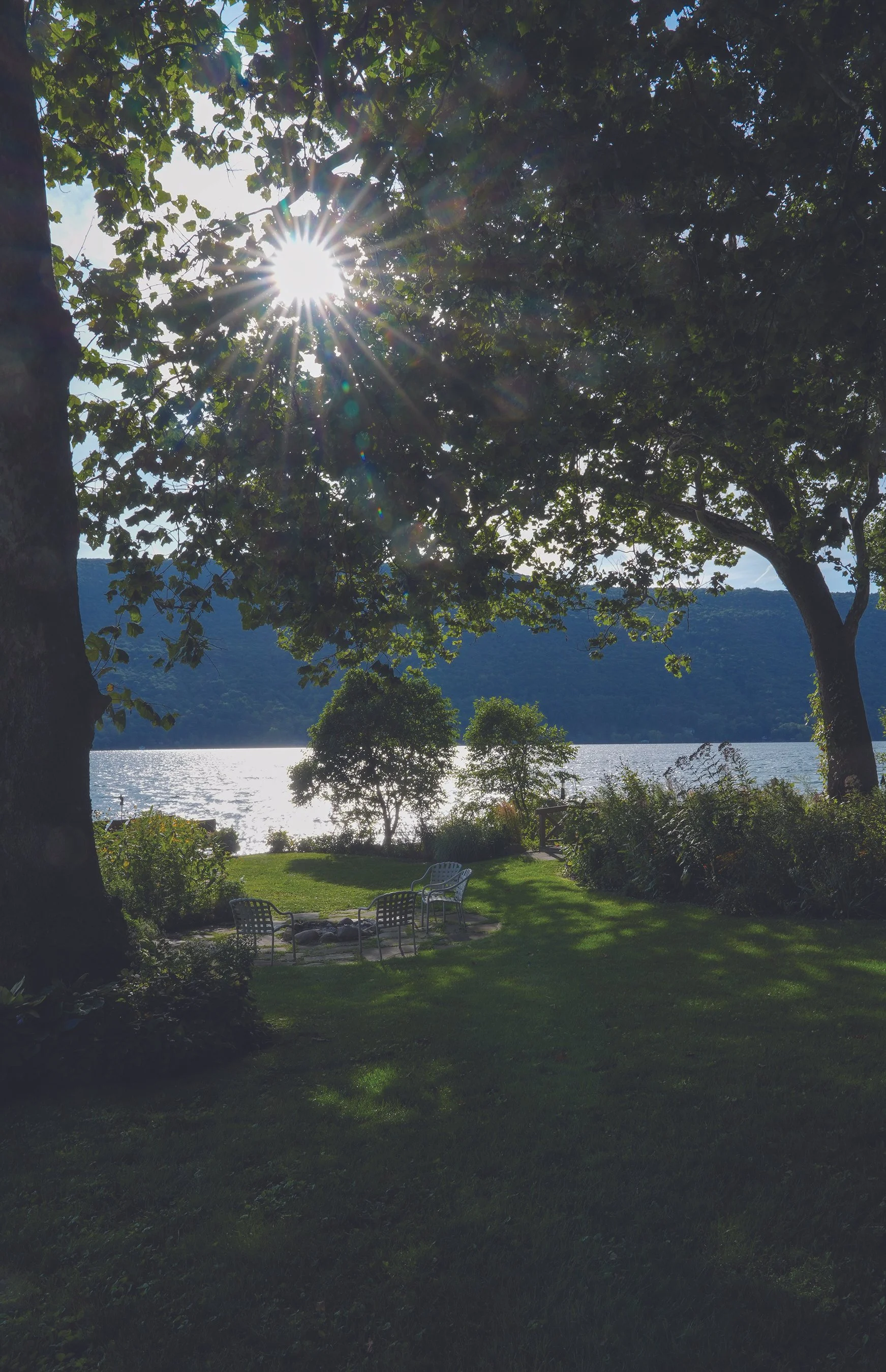
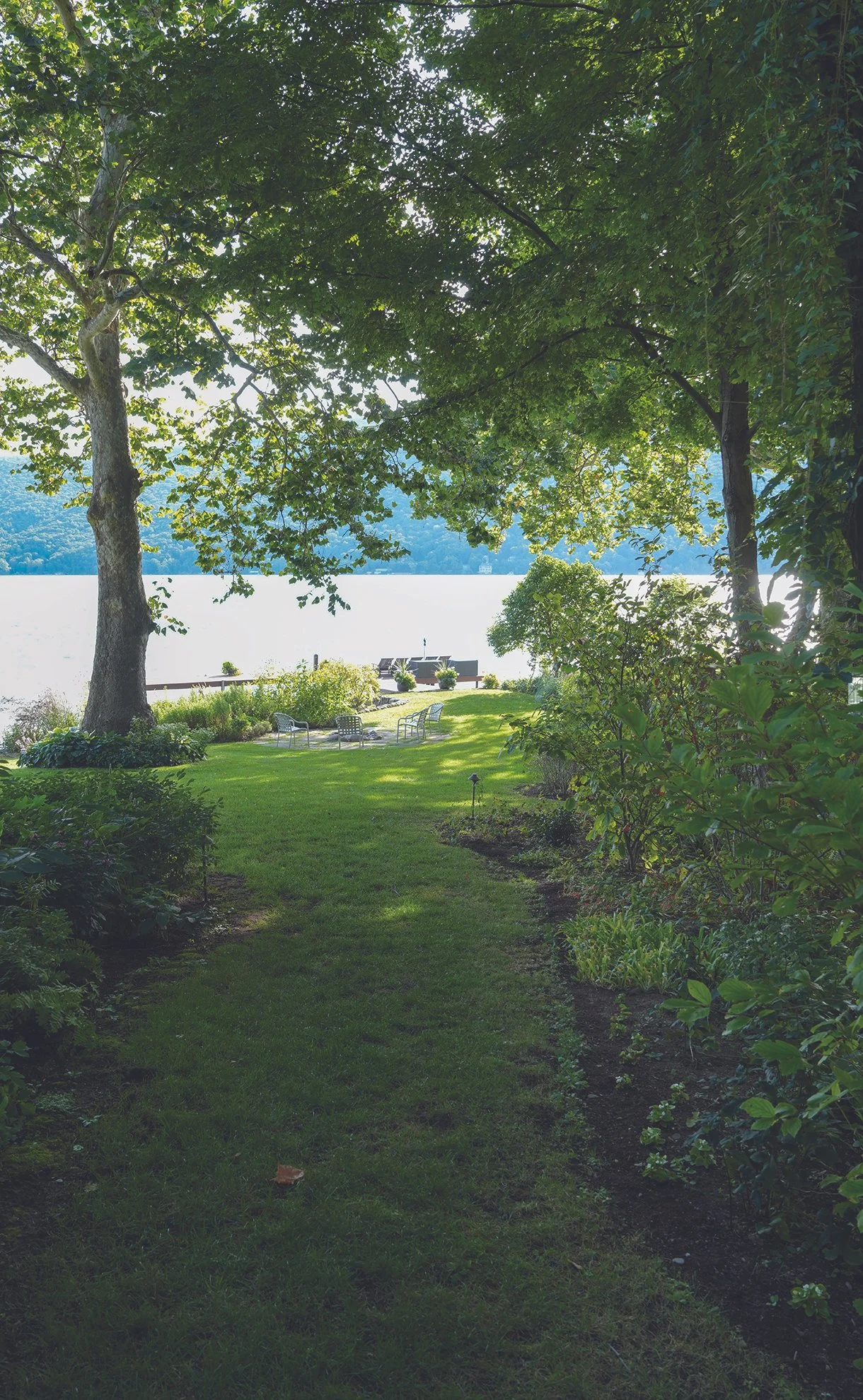
With its naturalized lakeshore plantings, tasteful patches of lawn, and its gorgeous hidden home that affords inspiring views of the forest and lake, the Shielses have perfected the balance of lakeshore living and environmental stewardship. They accomplished it through thoughtful design and purposeful plantings. “If you live on the water, you have a stake in preserving water quality,” Lucy says.
Respecting Boundaries
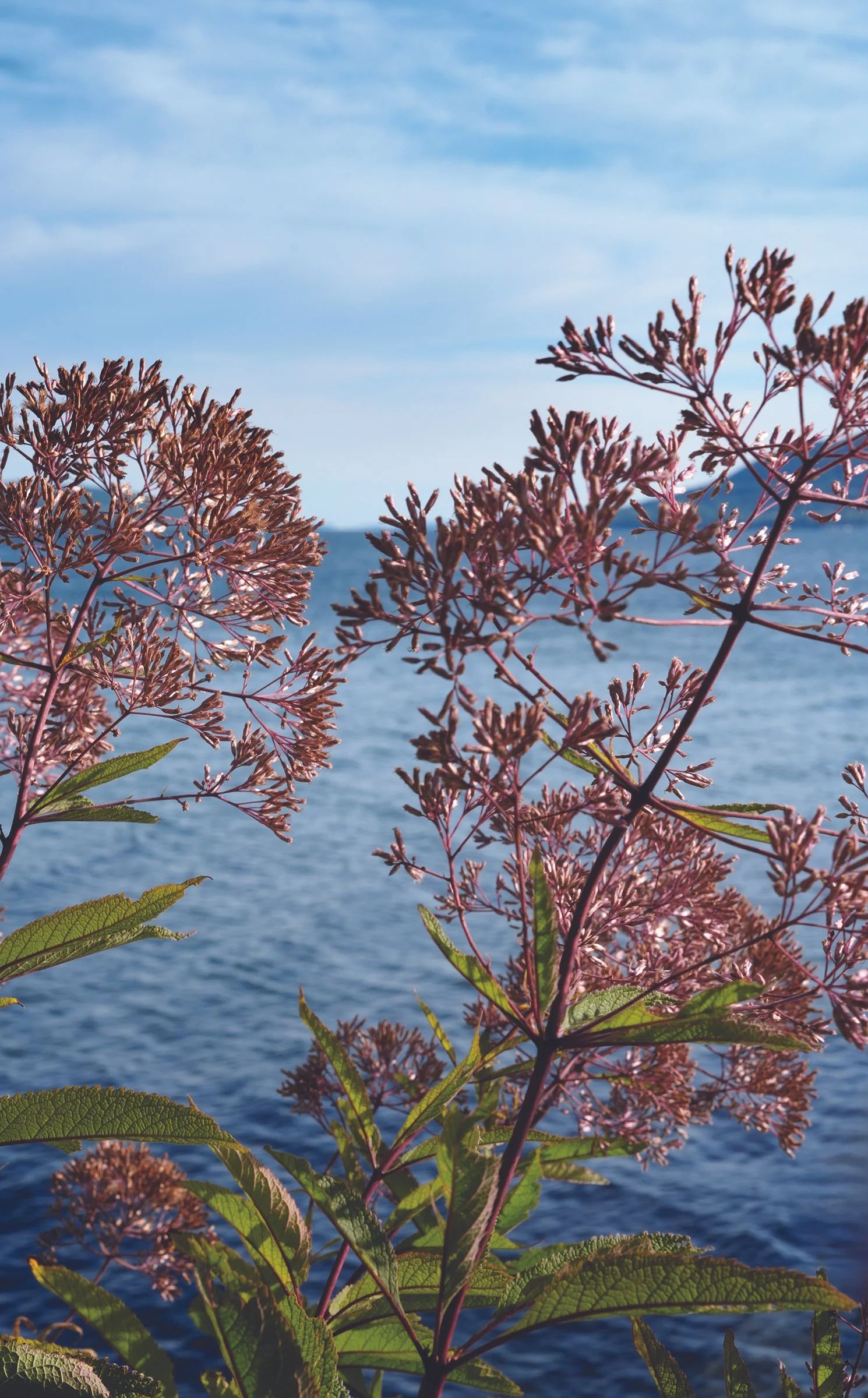
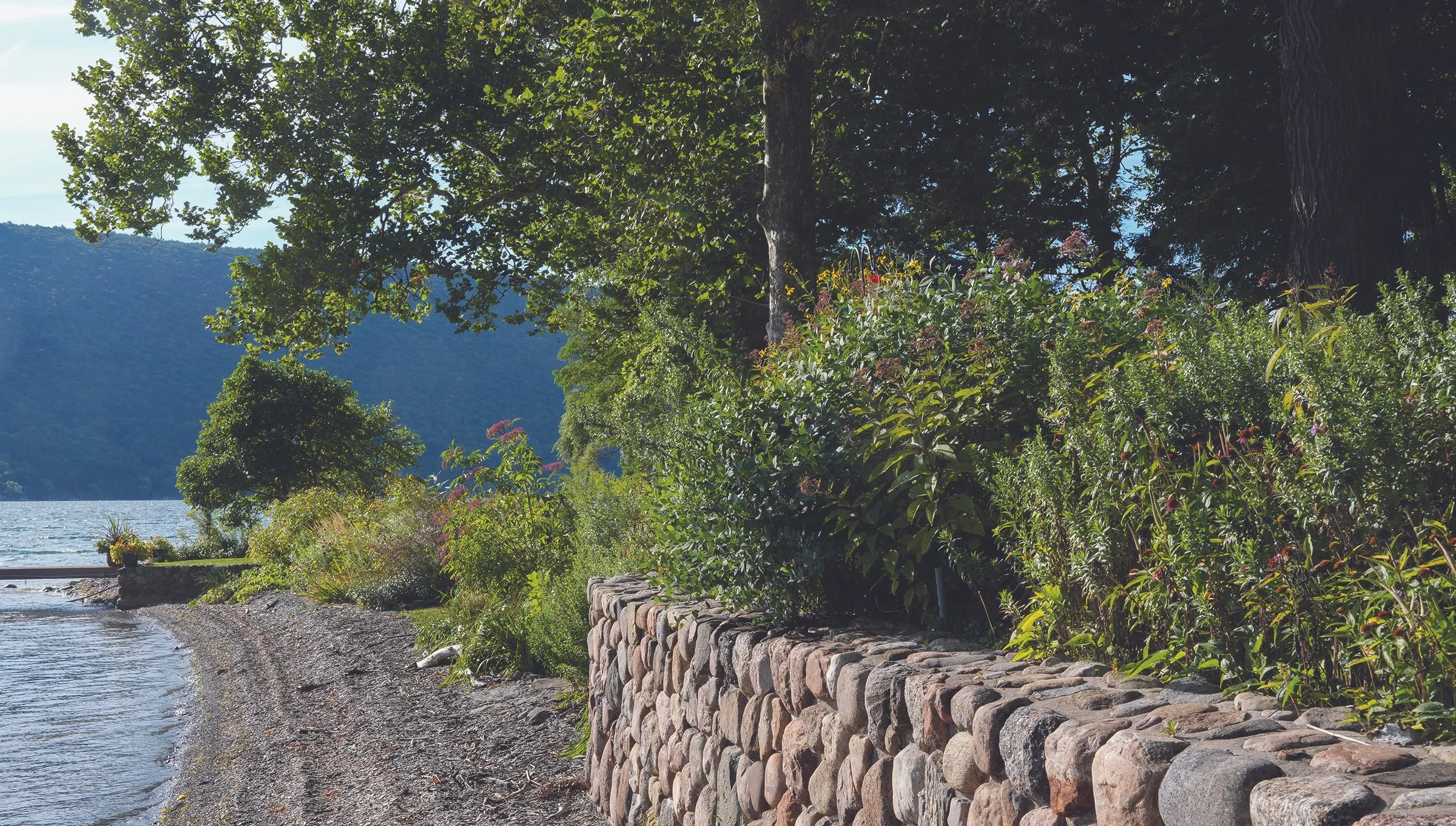
When the Shielses purchased the original property located on a delta in 1997, it was all grass to the 225 feet of lakeshore. For a garden capable of stabilizing erosion, filtering water, and returning habitat to wildlife, Lucy started with red leaf dogwood, then added perennials such as button bushes, birches, elderberries, and iris. When logs wash ashore, they remain, further stabilizing the shore and supporting diverse plant life. Even the cobblestone breakwall along the delta’s north side is supported with plantings that optimize filtration and erosion control.
The shoreline garden has become a high-functioning ecological system. “Where you have a lake and a bulkhead wall, the moisture gradient between the two is effectively 100% and 0%,” explain Zakery and 130 designny magazine outdoor living designnymagazine.com Sue Steele, of Steele Landscape Architecture (Steele). “With a naturalistic shoreline, the gradient is diverse, transitioning from the lake through many different levels of soil moisture. It’s those many different levels that sustain diversity of life.”
Sue Steele, of Steele Landscape Architecture (Steele). “With a naturalistic shoreline, the gradient is diverse, transitioning from the lake through many different levels of soil moisture. It’s those many different levels that sustain diversity of life.”
Stay And Play
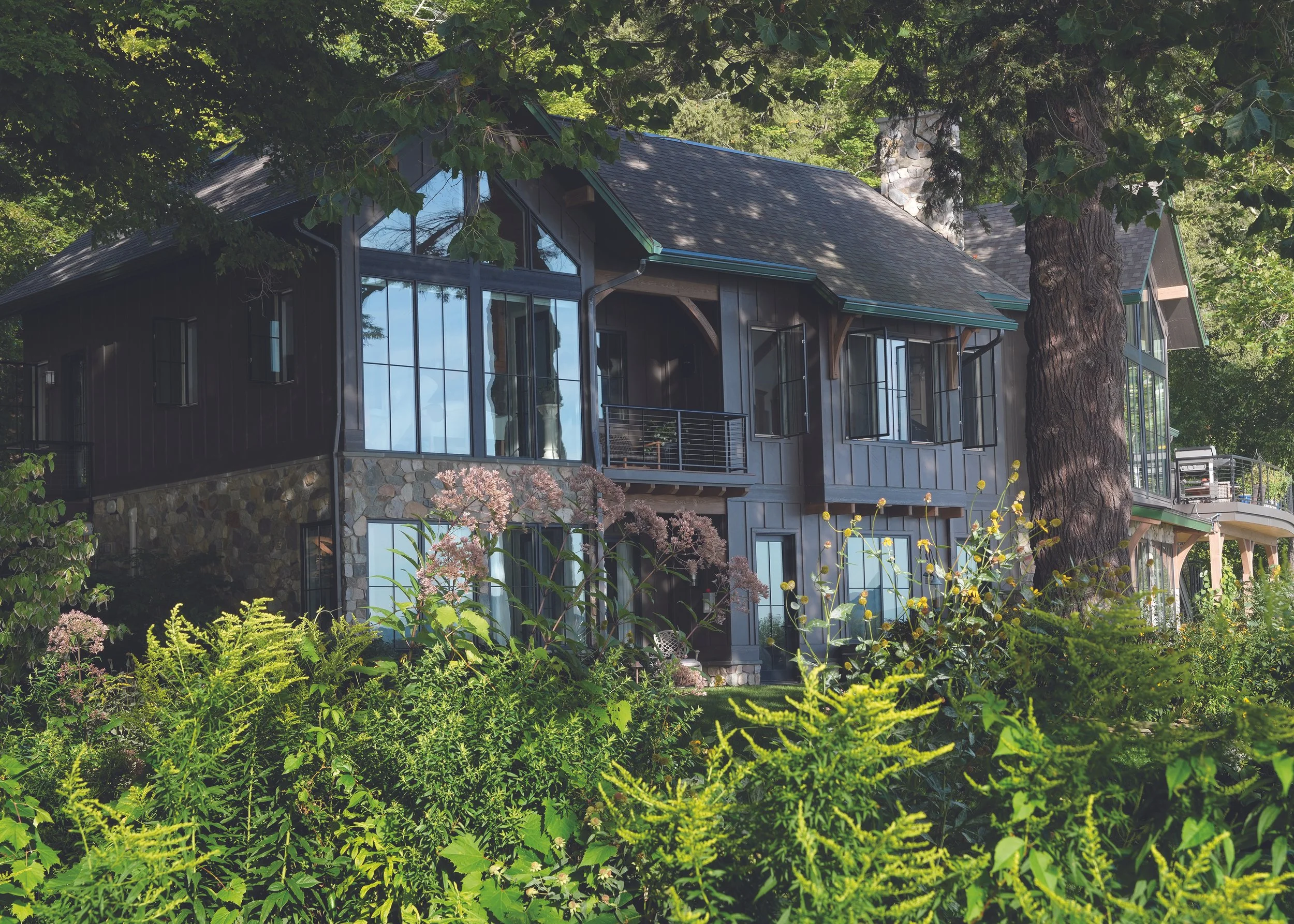
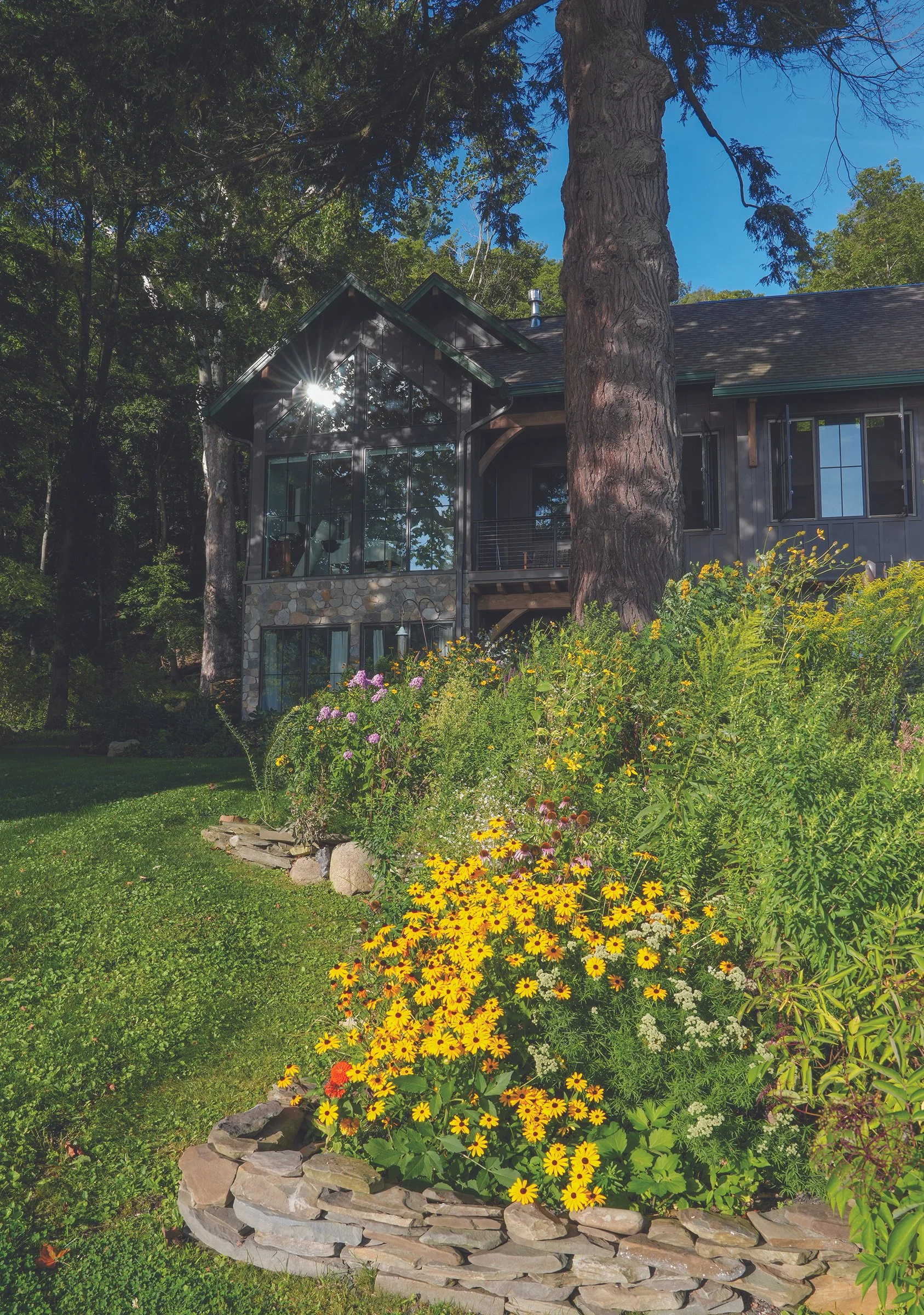
Eventually, the Shielses purchased the adjacent property on the other side of the creek. In 2021, they replaced the old cottage with a magnificent Arts and Crafts-inspired home for their permanent residence. Steele was brought in during the multi-year construction to develop a landscape plan. The house was designed around mature hemlock and sycamore trees, adding complexity to the plan. “They didn’t want a landscape that just looked good; they wanted it to function ecologically,” Zakery says.
Steele organized the landscape into two zones dubbed “stay and play.” Stay referring to design and selections that mature over time. Play areas are spaces along the lakeshore where the Shielses, especially Lucy, tinker with plants. Grassy areas encourage lakeside lounging with a view. Berries, herbs, potted vegetables, and fruit and nut trees support birds and pollinators year round. Sculptures, bird feeders, and birdhouses add deliberate elements to unstructured growth.
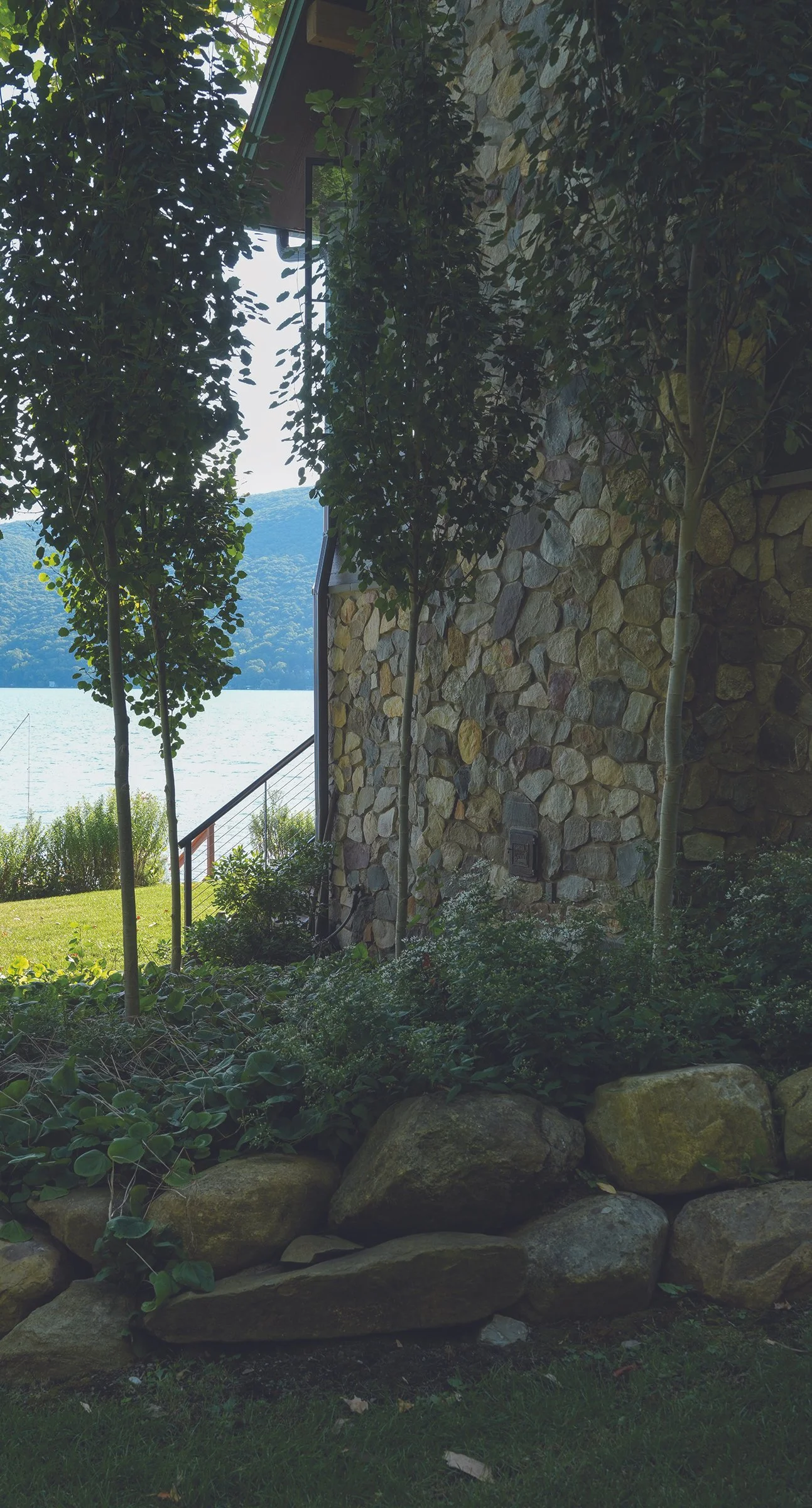
Inspired by the concept of forest bathing, a grove of columnar gray birches along the entry, intentionally planted closely together, creates a tiny woodland. Their pale trunks contrast with the home’s dark siding.
The home’s melange of dark colors and cobblestone siding blends into the woodland setting. Windows afford views into picturesque forest and lake sightlines. The stone siding mimics the pathways and breakwall. From the water, the 5,000-squarefoot home is nearly invisible. “Because we’re surrounded by dense forest, it connects to the environment rather than being this carved out, hollowed out space,” Lucy says.
Inspired?
Like any garden, natural landscaping requires some effort. But lake property homeowners who want to do the right thing for water quality can integrate smaller, contained versions of natural gardens capable of performing their ecological functions and still enjoy open lawns, tennis courts, and swimming pools.
Zakery explains, “You just have to have a willingness to have something that, currently as a culture, we perceive as a little bit messy, because nature is messy.”